
Featured

The 96th Academy Awards have come and gone, and “Oppenheimer” came out on top, winning best picture and earning Christopher Nolan his first-ever Oscar, for directing.

Oscar winners “Oppenheimer,” “Poor Things,” Emma Stone and more took home Academy Awards during Sunday’s ceremony.
Podcast


Actors Roundtable: Cillian Murphy, Mark Ruffalo, Jeffrey Wright, Paul Giamatti & more
40:37

Actresses Roundtable: America Ferrera, Emily Blunt, Fantasia, Julianne Moore, Sandra Hüller chat
40:25

Directors Roundtable: Bradley Cooper, Michael Mann, Alexander Payne and more
5:37

Showrunners Roundtable: Ramy Youssef, Craig Mazin, Janine Nabers, Bill Lawrence & More
42:00

Limited Series Roundtable: Emily Blunt, Riley Keough, Niecy Nash-Betts, Murray Bartlett & More
41:13

Drama Roundtable: Bella Ramsey, Diego Luna, Patrick Stewart, Helen Mirren & more
40:58

Envelope Comedy Roundtable: Adam Scott, Janelle James, Molly Shannon, Phil Dunster, Anthony Carrigan & more
40:38

FULL Directors Roundtable: Rian Johnson, Jordan Peele, Gina Prince-Bythewood, Charlotte Wells & More
42:36

FULL Actors Roundtable: Austin Butler, Adam Sandler, Jonathan Majors, Brendan Fraser & more
42:34

FULL Actresses Roundtable: Angela Bassett, Laura Dern, Janelle Monáe, Emma Corrin & More
42:37


Headlines
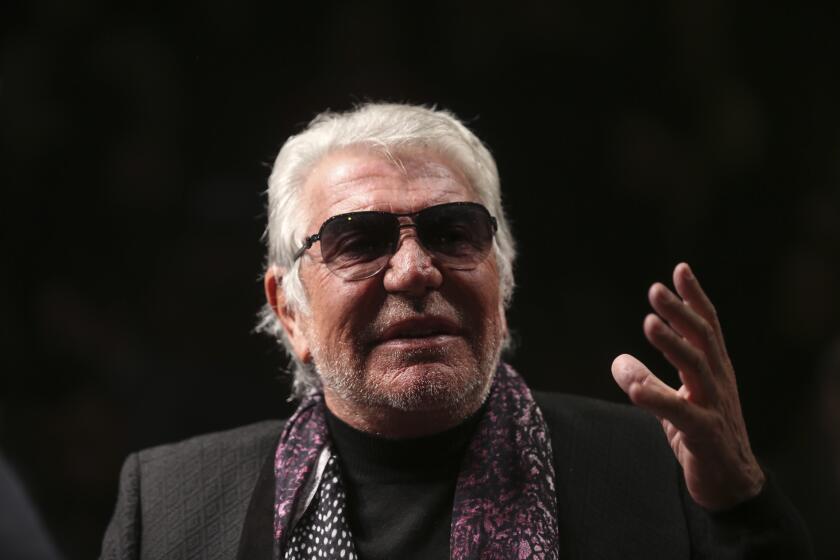
Fashion designer Roberto Cavalli, whose creations have been a staple of runways and red carpets, has died, according to the company bearing his name. He was 83.
Kevin Hart was honored and roasted Sunday by his friends and fellow comics when he was awarded the Mark Twain Prize for American Humor.
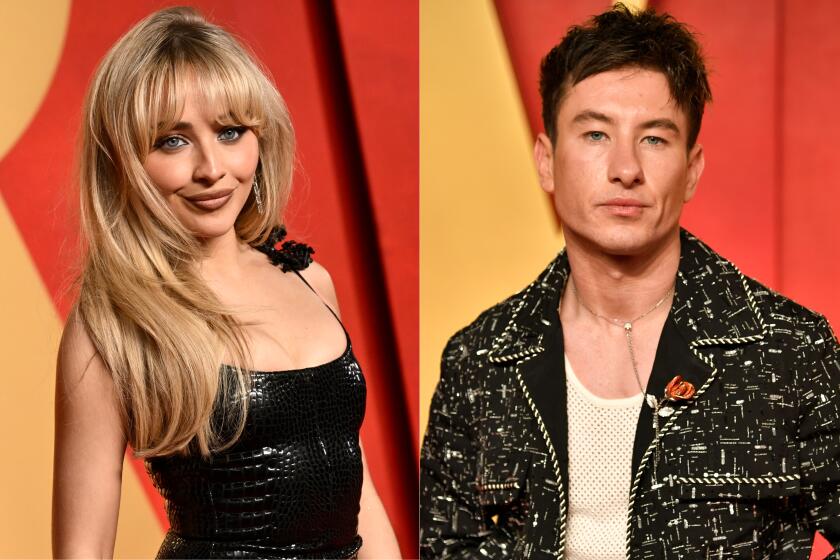
Read all about that and three more of our columnist Amy Kaufman’s most memorable celebrity encounters at the annual shindig for the Hollywood elite.
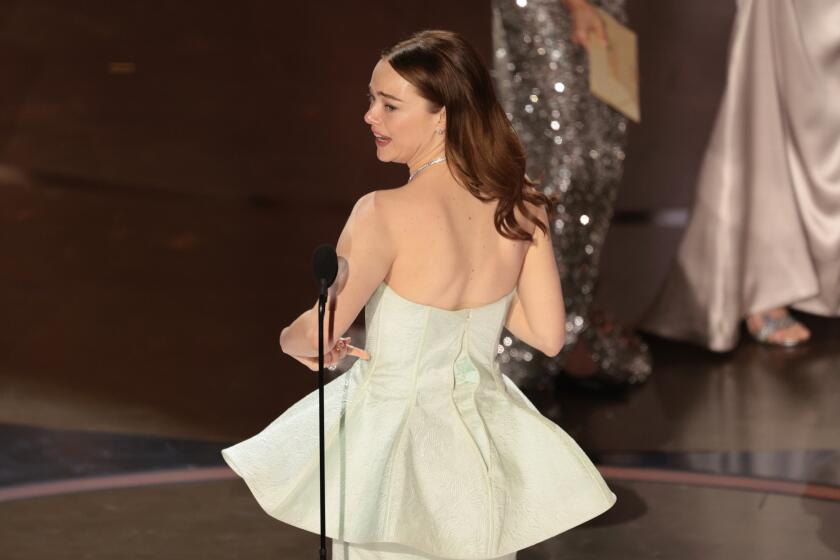
‘Poor Things’ star Emma Stone shared that she ‘busted’ her Oscars dress while busting a move to Ryan Gosling’s ‘I’m Just Ken’ during the 2024 Academy Awards.

Accepting the international feature Oscar for “The Zone of Interest,” director Jonathan Glazer delivered the night’s most pointed and controversial words.
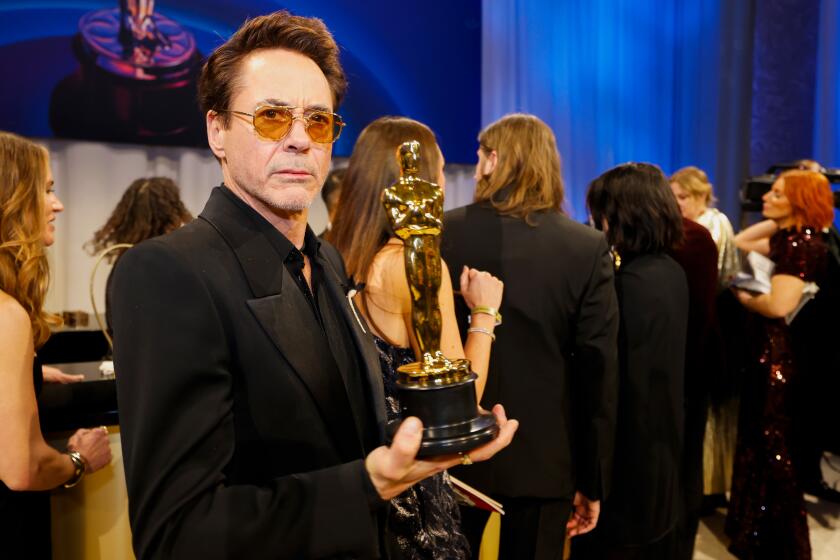
The Times was inside the room at the Governors Ball, the official after-party of the Oscars. Here are some of our favorite moments and photos from the night.
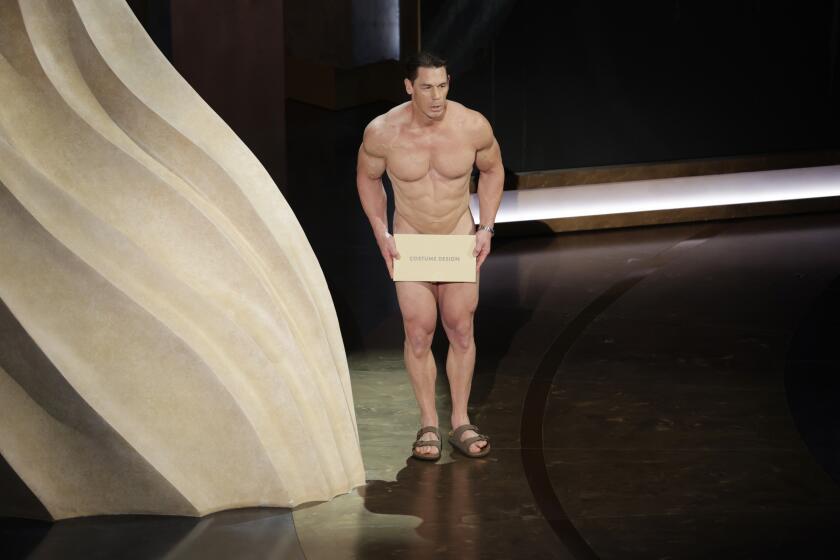
John Cena, mostly in the nude, pulled off one of the best bits at the 96th Oscars on Sunday. Backstage photos show what went into executing the viral gag.
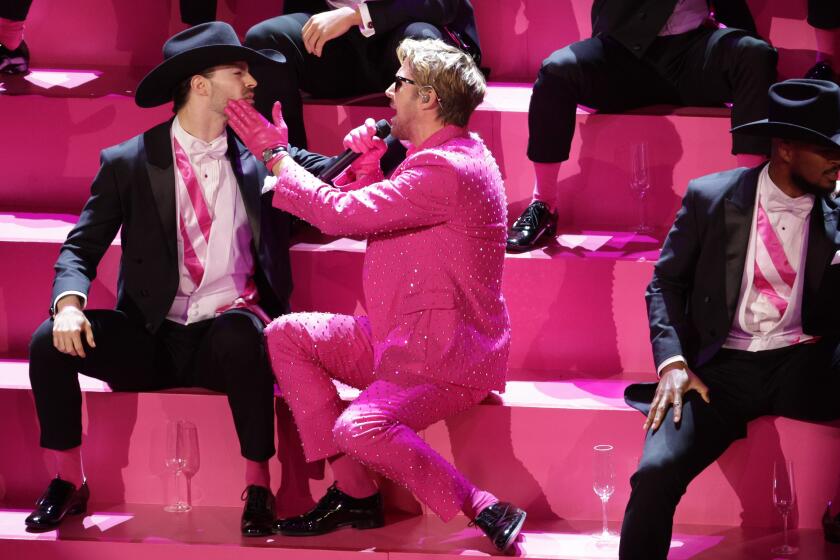
If “What Was I Made For?” had seemed for weeks like a lock at the Oscars, Billie Eilish and Finneas’ performance of the song on Sunday’s telecast faced some stiff competition from renditions of the other nominated tunes.
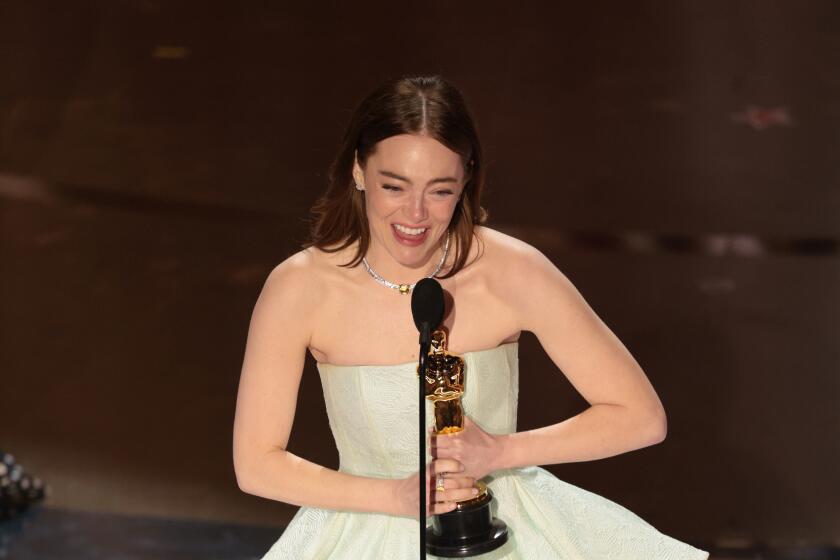
Emma Stone’s win for ‘Poor Things,’ her second in the category, came in a tight race with Gladstone, who would have been the first Native American to win the Oscar for best actress.
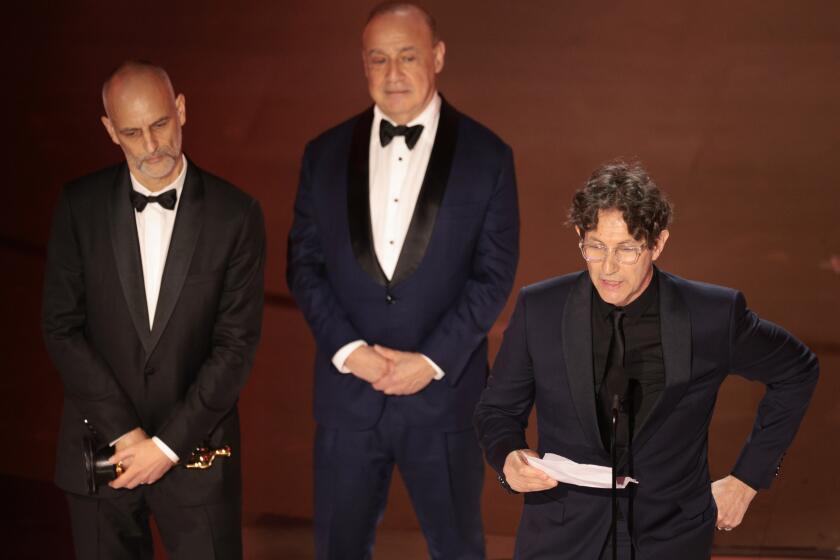
From the red carpet to acceptance speeches onstage, politics found its way into this year’s Academy Awards
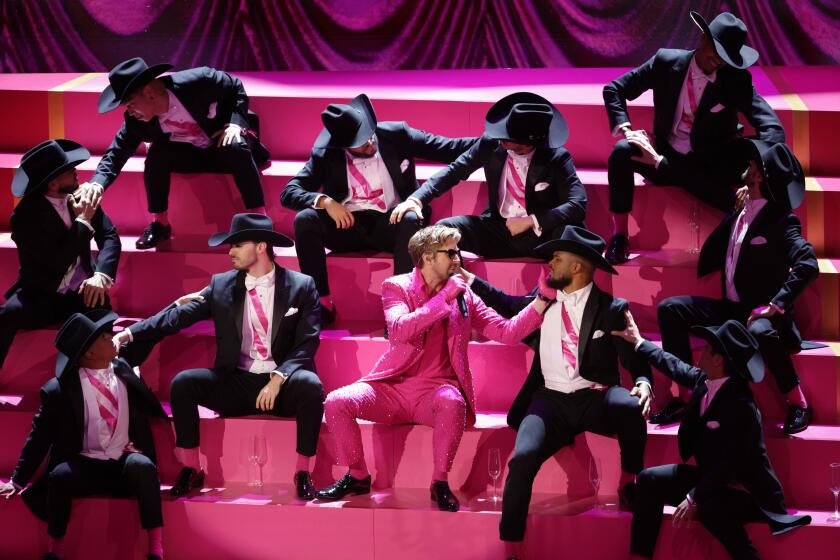
‘Barbie’ may have beaten ‘Oppenheimer’ (and everything else) at the box office last year, but its success at the 2024 Oscars was muted by comparison.
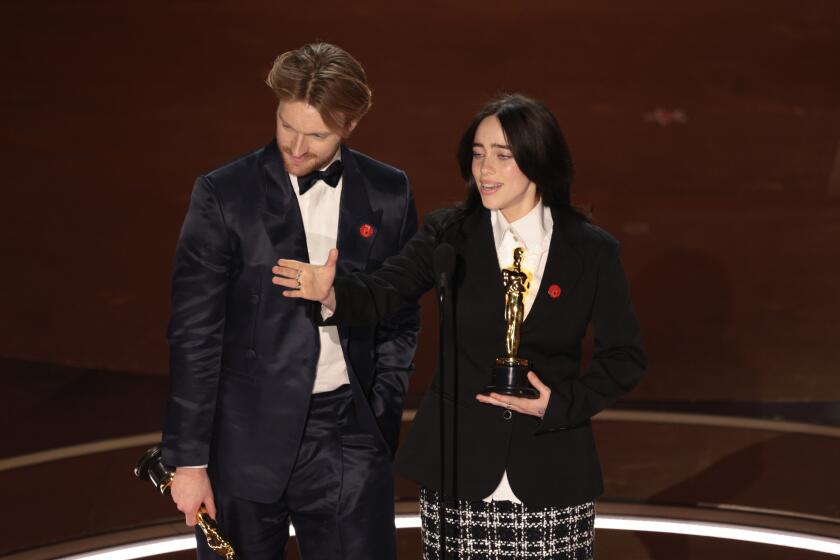
The 22-year-old singer-songwriter made history by winning the original song Oscar for her ‘Barbie’ ballad ‘What Was I Made For?’


From the Oscars to the Emmys.
Get the Envelope newsletter for exclusive awards season coverage, behind-the-scenes stories from the Envelope podcast and columnist Glenn Whipp’s must-read analysis.
You may occasionally receive promotional content from the Los Angeles Times.
In their own words

Video

From our Sundance studio in Park City to our annual Oscars roundtables, we’re asking Hollywood some Very Important Questions. Watch how they answered.
Screenings

Attend screenings, talks, roundtables and insider events with the industry’s most important players.
Newsletter
